Why Neutral Spinal Alignment During Sleep Matters
Maintaining the spine’s natural S shaped curve throughout sleep is critical for preventing chronic neck stiffness, shoulder tension, and persistent body pain. A well fitted pillow fills the empty gap between the mattress and the neck, holding the head and cervical spine in a neutral position without unnatural bending or tilting. Among all mainstream pillow materials on the market, memory foam stands out uniquely. It delivers stable structural spinal support while adapting precisely to individual head shapes, neck curves, and sleeping postures, making it the top choice for ergonomic sleep improvement.
Different pillow materials offer vastly different levels of support and comfort for spinal health. Memory foam provides high level structural support with perfect body contouring and pressure relief. Latex pillows also feature high support with flexible responsiveness and natural cooling properties. Down pillows deliver medium to low support with ultra soft texture and easy shaping. Polyester pillows are budget friendly with minimal supportive performance, failing to protect spinal alignment effectively. This obvious gap in functional performance makes memory foam pillows superior for long term spinal care and healthy sleep.
How Memory Foam Pillows Fix Nighttime Posture Strain
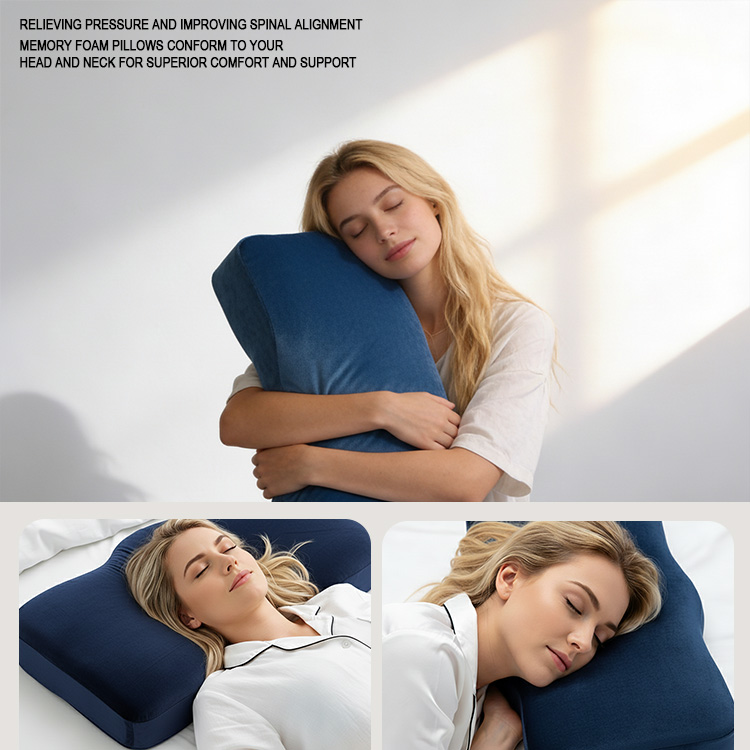
Memory foam pillows rely on professional viscoelastic material structure that actively responds to human body heat and sleeping weight. The material slowly molds to the exclusive contour of the head, neck, and upper spine, perfectly fitting the natural lordotic curve of the cervical spine. This customized shaping avoids common sleeping problems such as forward head tilt, lateral neck deviation, and uneven shoulder pressure, which are the leading causes of muscle strain for both back sleepers and side sleepers.
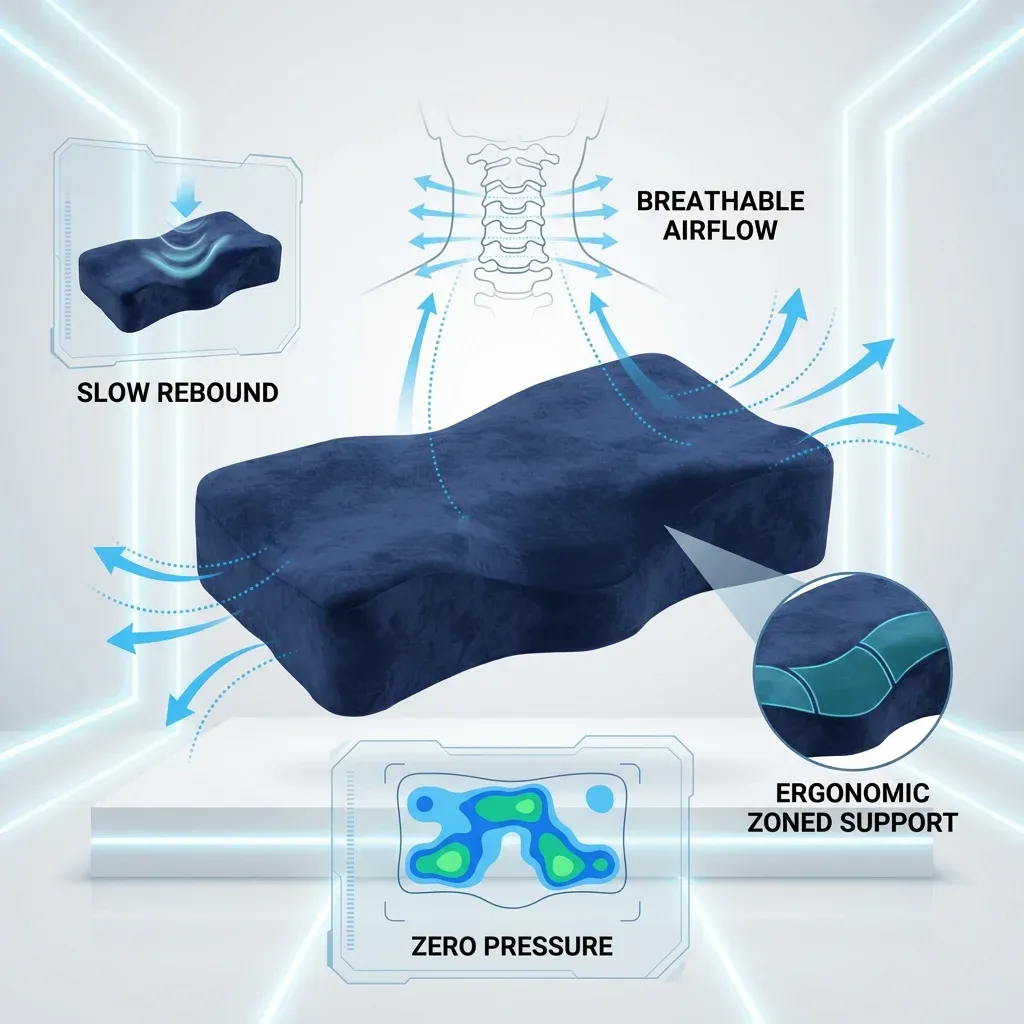
Uniform weight distribution is another core advantage of memory foam pillows. It effectively disperses concentrated pressure on the shoulders, jaw, and ears, greatly reducing involuntary tossing and turning during sleep. A professional controlled trial published in the 2022 Journal of Physical Therapy Science verified that participants who used standard memory foam pillows for four weeks achieved a 34 percent reduction in chronic neck pain. High density memory foam with 4 to 5 PCF provides firmer and more stable support, perfectly suitable for users with acute cervical discomfort or larger body frames. By keeping the spine in its natural relaxed S shape, qualified memory foam pillows efficiently prevent morning soreness and long term postural disorders.
Core Sleep Quality Benefits of Memory Foam Pillows
Memory foam pillows comprehensively upgrade sleep quality by solving three major sleep obstacles: spinal misalignment, local pressure accumulation, and unbalanced body temperature. The professional viscoelastic material closely contours the head and neck, relieving tightness in the upper trapezius and suboccipital muscles. Targeted ergonomic support promotes smooth local blood circulation and eliminates frequent nighttime micro arousals caused by physical discomfort, helping users maintain continuous deep sleep.
Unlike traditional down and polyester pillows that easily flatten, shift, or deform overnight, premium memory foam maintains stable loft and consistent spinal support all night long, reducing frequent manual position adjustments. Its unique open cell structure enhances internal air circulation, accelerates heat and moisture dissipation, and avoids overheating and sweating that force users to flip pillows repeatedly. In addition, high density memory foam features natural hypoallergenic performance, resisting dust mites, mold, and harmful bacteria growth, creating a clean sleeping environment for allergy and asthma sufferers.
Powerful motion isolation is another practical advantage for couples. The material absorbs tossing and turning movements effectively without transferring vibration interference, ensuring undisturbed sleep for both partners. When users select a proper loft matching their sleeping position, memory foam pillows can keep the respiratory tract unobstructed and stabilize the head neck junction, effectively alleviating snoring and mild sleep apnea symptoms for more restorative sleep every night.
Guide to Choosing Qualified Memory Foam Pillows
Density and Responsiveness Balance
Memory foam density is measured in pounds per cubic foot, which directly determines the pillow’s support strength, service life, and rebound performance. High density foam ranging from 4 to 5 PCF provides firm and durable structural support, ideal for users requiring strong cervical reinforcement, though it retains slightly more heat. Low density foam below 3 PCF offers faster rebound and better air permeability, fitting light sleepers and users who toss frequently, but it is prone to long term compression deformation.
For most adult users, medium density foam of 3.5 to 4.5 PCF achieves the best comprehensive balance. It is soft enough to cradle the head and neck without excessive sinking, and durable enough to maintain complete shape and support performance for three to five years, making it the most cost effective and practical choice for daily household use.
Scientific Loft Selection by Sleeping Position
Pillow loft refers to the natural height of an uncompressed pillow, which is the key factor to maintain accurate spinal alignment for different sleeping habits. Side sleepers need high loft pillows of 4 to 6 inches to fill the gap between the ears and shoulders, ensuring horizontal and straight spinal alignment during side sleeping. Back sleepers adapt to medium loft pillows of 3 to 5 inches, which gently lift the head to support cervical lordosis without excessive neck extension.
Stomach sleepers must choose low loft pillows below 3 inches to avoid upward neck hyperextension and spinal compression. Matching the correct pillow loft to your dominant sleeping posture eliminates compensatory muscle tension and fundamentally reduces morning neck stiffness and soreness caused by improper sleeping posture.
Authoritative Safety Certifications
Reliable memory foam pillows must pass strict third party authoritative certifications to ensure safety and health. CertiPUR US certification confirms that the foam material contains no ozone depleting substances, heavy metals, formaldehyde, or prohibited phthalates, with volatile organic compound emissions controlled within safe standards. OEKO TEX Standard 100 certification verifies that all textile accessories including pillow covers and stitching are free of harmful substances throughout the entire production process.
Pillows with dual certifications effectively reduce chemical exposure and protect indoor air quality, especially suitable for sensitive groups, children, and people with chronic respiratory problems. These professional certifications represent genuine product quality rather than false marketing hype, serving as the most reliable standard for selecting healthy and safe memory foam pillows.
Effective Maintenance to Extend Pillow Lifespan
With standardized daily maintenance, a high quality memory foam pillow can serve 3 to 5 years, far longer than ordinary pillows that need replacement every year. The core maintenance principle is to protect the foam’s internal cellular structure from moisture erosion, body oil accumulation, ultraviolet damage, and long term fixed compression.
Users must equip the pillow with a breathable and washable pillowcase and clean it every 2 to 4 weeks to isolate dust and stains. Never soak or machine wash the memory foam core. For local stains, apply mild detergent with a damp cloth for spot cleaning, then place the pillow in a cool and ventilated place for thorough air drying, avoiding direct sunlight exposure. Daily rotation and gentle fluffing can maintain uniform loft and prevent partial softening and depression.
When not in use, store the pillow flat in a dry and cool environment. Avoid folding, rolling, or vacuum sealing, which will cause permanent deformation of the foam cells. Timely replacement is also necessary. Once the pillow loses fast rebound, forms persistent indentations and lumps, or fails to provide stable contouring support, it should be replaced immediately to ensure continuous spinal protection and sleeping hygiene.
Frequently Asked Questions
What is the ideal loft for different sleeping positions? Side sleepers fit high loft pillows of 4 to 6 inches, back sleepers adapt to medium loft pillows of 3 to 5 inches, and stomach sleepers require low loft pillows under 3 inches to maintain standard spinal alignment.
How long can a memory foam pillow last with proper care? With scientific and consistent maintenance, a premium memory foam pillow can last 3 to 5 years, greatly exceeding the one year service life of conventional pillows.
What certifications should I look for in a memory foam pillow? It is recommended to choose pillows with CertiPUR US and OEKO TEX Standard 100 dual certifications to ensure safe, healthy and harmless material quality.
Can memory foam pillows help with snoring? Yes. A properly fitted memory foam pillow keeps the head neck airway unobstructed and maintains neutral spinal alignment, effectively relieving snoring and mild sleep apnea symptoms.
How should I clean my memory foam pillow? Avoid overall washing. Clean local stains with mild detergent and damp cloth, air dry completely in shade, and use a washable pillowcase for daily protection.
 EN
EN