EN


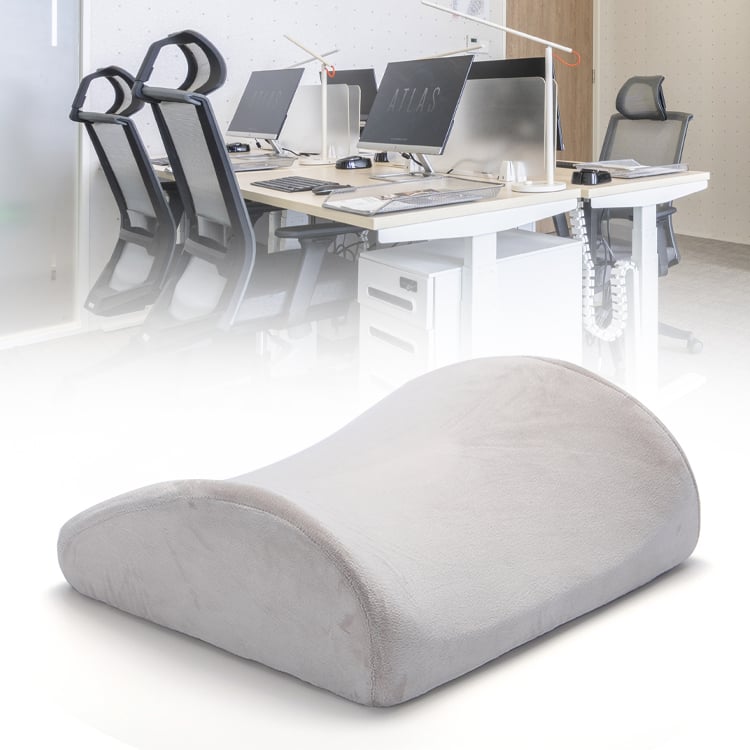

A knee rest is a contoured cushion placed between or beneath the legs to reshape how body load travels through the pelvis, hips, and spine. By holding the lower limbs in a neutral, supported position, the device lowers shear and rotational stress on the knee joint, the sacroiliac region, and the lumbar spine during the night.
Spinal biomechanics depend on maintaining the natural curves of the neck, mid-back, and lumbar region while the body lies still for hours. When the pelvis rotates freely, the lumbar curve flattens or over-arches, forcing spinal discs and paraspinal muscles to work against gravity. A contour that supports the pelvis keeps the vertebral column close to its standing posture, which spreads mechanical load across a wider surface instead of concentrating it on a few segments.
The knee rest elevates the upper leg slightly, which rotates the pelvis backward and restores a gentle lumbar arch. This position shortens the lever arm acting on the lower back, so the erector muscles stay relaxed rather than bracing all night. Foams meeting CertiPUR-US emission limits and covers tested to OEKO-TEX Standard 100 give a safe, low-odor sleep surface, while plants running ISO 9001 systems help keep dimensional consistency batch after batch.
A forward pelvic tilt pushes the lumbar spine into extension and narrows the posterior disc space, raising local pressure on the intervertebral joints. By limiting that tilt, the cushion reduces compressive load on the disc wall and the facet joints. This mechanism explains why many side and back sleepers report less morning stiffness after changing limb support.
The hip and knee are linked joints; changing the angle at one changes torque at the other. A knee rest that holds the femur and tibia at angles unloads the medial compartment of the knee and eases tension in the iliotibial band and hip rotators. The result is lower joint pressure without active muscle effort from the sleeper.
Side sleeping lets the top leg drop across the body, rotating the pelvis and twisting the lumbar spine. A knee rest placed between the knees separates the limbs and keeps the hips stacked, which cuts rotational strain on the sacroiliac joint and the knee cartilage. This stacked posture also narrows the gap that otherwise compresses the ankle and outer knee.
Back sleepers who prop the legs on a knee rest bend the knees about twenty to thirty degrees, which flattens the lumbar curve and relaxes the hamstrings and hip flexors. The supported bend lowers the pull on the pelvis and reduces the load transmitted through the knee joint. The posture mirrors the neutral alignment taught in OSHA workplace ergonomics guidance for seated rest.
Certain sleepers feel the effect sooner because their joints already carry extra load or reduced mobility. People with knee osteoarthritis, pregnancy-related pelvic pain, or recent lower-limb surgery often gain the clearest relief, since the cushion removes the twisting forces that aggravate those conditions.
During pregnancy the widening pelvis and shifting centre of mass increase lumbar strain and hip rotation at night. A knee rest between the knees supports the heavier belly side and keeps the spine aligned. For knee arthritis, the cushion reduces varus loading on the joint, easing the grinding pressure that builds when the legs collapse inward during sleep.
After knee or hip procedures, clinicians often recommend keeping the operated limb elevated and aligned to protect the repair and limit swelling. A knee rest holds that position passively, which supports lymphatic drainage and steady blood flow. Better circulation also helps tissues recover and lowers the risk of pressure points forming over long, motionless hours.
Procurement teams and home users should weigh material, shape, and certification before buying, then follow simple care to protect the foam. A European home-textile distributor once struggled with returned leg pillows that lost shape after a few months. The problem traced to low-density filling and untested covers. Switching to a knee rest built from viscoelastic memory foam with breathable, washable covers and requesting OEKO-TEX and BIFMA alignment references cut complaints and stabilised repeat orders.
Buyers should inspect foam density and recovery, since slow-return viscoelastic material distributes pressure more evenly than rigid polyfoam. Request documents showing foams meeting CertiPUR-US emission limits and covers tested to OEKO-TEX Standard 100; ask whether the plant runs ISO 9001 systems. For seating-related items, BIFMA and ANSI ergonomics performance benchmarks give an extra reference point during supplier audits.
Place the knee rest between the knees for side sleeping or beneath the calves for back sleeping, adjusting until the pelvis feels level. Removable, washable covers keep dust mites and sweat away; air the foam monthly and avoid direct sunlight to slow viscoelastic breakdown. Regular inspection for permanent dents helps decide when replacement protects joint comfort.
In summary, a knee rest relieves joint pressure by holding the pelvis, hips, and knees in neutral alignment, which lowers rotational and compressive load on the spine and knee joint. The contour supports the lumbar curve, eases hip angle strain for side and back sleepers, and aids recovery and circulation. Choosing certified viscoelastic foam and following simple care keeps the relief consistent night after night.
What is the main biomechanical effect of a leg support pillow during sleep?
Answer: A knee rest placed between or beneath the legs holds the pelvis, hips, and knees in a neutral, supported position. This posture shortens the lever arm on the lower back, reduces pelvic rotation, and lowers shear and compressive load on the spinal discs and knee joint. The contour also keeps the femur and tibia at angles that unload the medial knee compartment, easing tension in surrounding soft tissue without active muscle effort.
Why do side sleepers feel relief from a between-knee support?
Answer: Side sleeping lets the top leg drop across the body, rotating the pelvis and twisting the lumbar spine. A contoured support placed between the knees separates the limbs and keeps the hips stacked, which cuts rotational strain on the sacroiliac joint and the cartilage. This stacked posture also narrows the gap that compresses the outer knee and ankle. Many side sleepers notice less morning stiffness once the twisting force is removed during the night.
How should back sleepers position a leg support pillow?
Answer: Back sleepers benefit from propping the legs so the knees bend about twenty to thirty degrees, which flattens the lumbar curve and relaxes the hamstrings and hip flexors. The support should sit beneath the calves, with the pelvis feeling level rather than tilted. Adjusting height until the lower back stays soft prevents the pelvis from pulling forward. Steady, passive support lowers the load transmitted through the joint and helps the spine hold a neutral line.
Which materials indicate a safe, durable joint support cushion?
Answer: Viscoelastic memory foam distributes pressure more evenly than rigid polyfoam and recovers its shape after compression. Buyers should request foams meeting CertiPUR-US emission limits and covers tested to OEKO-TEX Standard 100 for low odor and skin-safe textiles. A plant running ISO 9001 systems helps keep dimensional consistency, while BIFMA and ANSI ergonomics benchmarks give a reference during supplier audits. Dense, slow-return material resists permanent dents and protects long-term comfort.
Can a leg support pillow help after knee or hip surgery?
Answer: Clinicians often recommend keeping the operated limb elevated and aligned to protect the repair and limit swelling. A contoured support holds that position passively, aiding lymphatic drainage and steady blood flow through the lower limb. Better circulation supports tissue recovery and lowers the risk of pressure points forming over long, motionless hours. The cushion removes the twisting forces that otherwise aggravate healing joints, making rest more comfortable during early recovery.

Established in 2007, Welldo is a manufacture and trader specialized in the research, development and production of all kinds of memory foam pillows. We are located in Xiamen, with convenient transportation access. All of our products comply fit international quality standards and are greatly appreciated in a variety of different markets throughtout the world. In order to further enhance the company's strength and competitive edge, and at the same time respond to the call of the country