EN



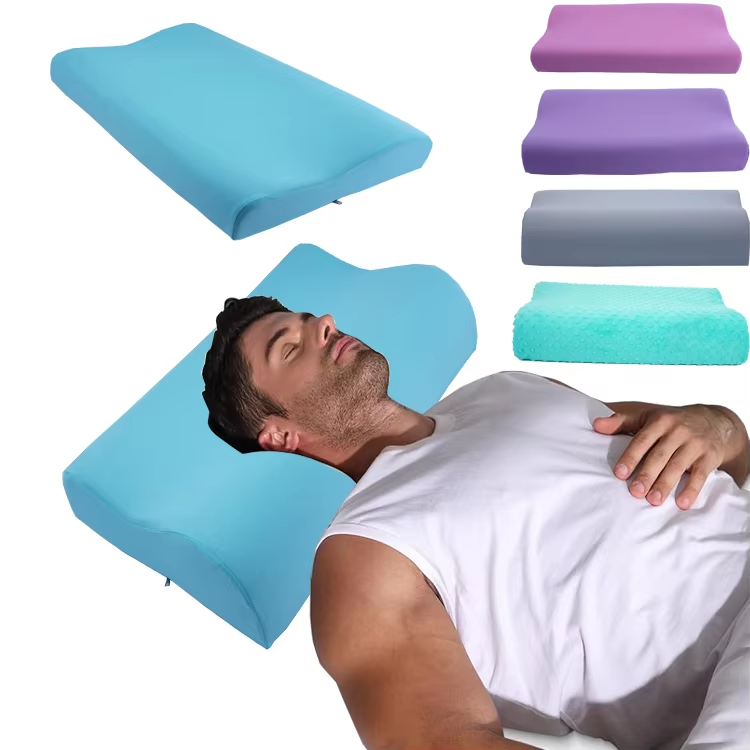
Pillow loft—the compressed height under the head and neck—directly shapes cervical alignment. In supine sleep, excessive loft forces the neck into flexion; insufficient loft allows the head to tilt backward, flattening cervical lordosis. In side sleep, the pillow must fill the gap between the ear and shoulder to preserve neutral spinal alignment and keep the nose aligned with the sternum. A 2025 review in the Open Public Health Journal links a general loft range of 7–11 cm to improved sleep quality, more even pressure distribution, and reduced neck muscle tension. Yet optimal loft is inherently individual: a 2024 biomechanical study in Medical & Biological Engineering & Computing found that for side sleepers, an individualized pillow height index (Hφ) of 9.74–11.76 cm best replicated natural standing cervical curvature and minimized internal musculoskeletal force—while heights of 11.76–13.78 cm rated highest for subjective comfort. This divergence between biomechanical ideal and perceived comfort underscores why generic pillows often fall short—and why custom loft, calibrated to shoulder width, cervical curvature, and habitual sleep position, is clinically meaningful.
| Sleep Position | Alignment Target | Evidence-Based Loft Range |
|---|---|---|
| Supine | Preserve cervical lordosis; avoid neck flexion | 7–11 cm general range |
| Side lying | Fill ear-to-shoulder gap; align nose with sternum | Hφ 9.74–13.78 cm, individualized |
Standard pillows typically offer fixed loft and uniform fill—two features fundamentally at odds with how people actually sleep. First, they cannot adapt as sleepers shift between supine and lateral postures. A height adequate for supine alignment often becomes insufficient in side-lying, increasing lateral bending and elevating paraspinal muscle load. Second, subjective comfort is a poor proxy for objective alignment. As noted in a 2021 PMC review, pillow height influences cervical alignment, pressure distribution, and neck/shoulder electromyographic activity—but perceived softness or familiarity can mask biomechanically harmful positioning. Pain and stiffness correlate strongly with prolonged, elevated muscle activity—not just immediate sensation. A custom pillow bridges this gap by anchoring loft and support zones to measured anatomy: shoulder width, neck length, and dominant sleep position. This measurement-informed design better sustains physiological cervical curvature across nocturnal movement—aligning with clinical standards for ergonomic sleep support.
Evidence on custom pillow efficacy shows modest but clinically relevant benefits—particularly when neutral alignment is prioritized over comfort alone. A 2018 preliminary study of ergonomic latex pillows in patients with cervical spondylosis reported reductions in pain and disability scores after structured, nightly use. Similarly, a 2017 comparative study in recreational athletes with chronic mechanical neck pain found improved pain ratings and sleep quality with contoured cervical support. Functional outcomes also respond: research links optimized pillow support to less morning cervical stiffness and fewer tension-type headache episodes (2010). Still, a 2011 analysis cautioned that pillow intervention alone does not guarantee symptom-free waking—especially when fit mismatches individual posture or pathology. Systematic reviews consistently identify maintaining neutral cervical alignment during sleep as the strongest predictor of improvement. Because custom pillows allow precise matching of loft, contour, and material response to anatomical and postural variables, they offer a more targeted solution than off-the-shelf alternatives. Some users report improved daytime function and reduced reliance on analgesics—but only when fit is objectively verified and used consistently.
Provider-guided fitting distinguishes true customization from marketing claims: it begins with objective assessment—cervical lordosis angle, shoulder width, neck length, and habitual sleep position—before prescribing loft, contour, and material properties. A 2019 pilot randomized controlled trial in patients with neck pain and confirmed spinal degeneration found that dimension-based pillow selection significantly improved comfort and reduced symptom frequency compared to standard options. Off-the-shelf pillows, by contrast, rely on preset contours and fixed lofts that rarely accommodate broad-shouldered side sleepers or back sleepers requiring lower occipital lift. Measurement-informed designs adjust fill volume, height gradients, and lateral support to sustain neutral alignment across postures—a principle underscored by a 2016 ergonomic pillow design framework emphasizing pressure modeling and curvature fidelity over subjective firmness. While provider guidance improves likelihood of success, adherence matters: nightly use and gradual adaptation remain essential. When alignment is verified and matched to anatomy, fitted custom pillows demonstrate a modest but consistent advantage over generic alternatives.
A pillow earns the label “custom” only when three functional elements integrate intentionally: contoured geometry, adjustable fill, and adaptive materials. The contour must include a central cradle to limit rotational strain and side bolsters calibrated to sleep position—higher for side sleepers with broader shoulders, lower and flatter for supine users to prevent forward head posture. Adjustable fill—via removable inserts or zipped compartments—enables fine-tuning across mattress firmness levels and evolving needs, ensuring the neck remains neutrally aligned night after night. Adaptive materials like slow-response memory foam or natural latex distribute pressure more evenly than conventional foam, reducing peak occipital stress and stabilizing the head during micro-movements. Crucially, these features must be verifiable—not just described on packaging. When all three are present and interoperable, the pillow adapts to the user’s cervical support requirements rather than compelling the user to conform to a static shape.
Determining whether a custom pillow will help starts with understanding how your current sleeping surface affects your neck. It is not a universal fix—but a precision tool for sustaining neutral alignment during sleep. Before investing, assess your sleep position, pain pattern, response to current pillow adjustments, and medical history. These factors clarify whether symptoms stem from suboptimal support—or reflect a deeper musculoskeletal condition requiring clinical evaluation.
| Factor | Signs a custom pillow may help | Signs a standard pillow may be enough |
|---|---|---|
| Sleep position | You sleep mostly on your back or side and wake with neck stiffness | You change positions often and do not wake with consistent pain |
| Pain pattern | Pain is strongest in the morning and eases after moving | Pain stays constant or worsens during the day despite rest |
| Current pillow test | Changing pillow height or folding the pillow briefly reduces symptoms | Adjusting pillow loft makes no noticeable difference |
| Medical history | You have been diagnosed with cervical spondylosis or postural neck strain | You have radiating arm pain, numbness, or recent neck trauma |
A practical first step is a two-week self-assessment. Try modifying your existing pillow loft using a folded towel or removable insert. Track changes in morning stiffness, headache, or upper back tension. If small adjustments bring measurable relief, a custom pillow with adjustable fill or posture-specific contouring may be warranted. If symptoms persist unchanged, the root cause likely lies beyond pillow support—and warrants provider-directed assessment.
Also watch for red-flag symptoms: numbness, tingling, arm weakness, gait disturbance, or pain following trauma. These suggest possible nerve compression or structural instability—and require prompt clinical evaluation before changing sleep equipment. A custom pillow can support recovery after diagnosis, but should never delay assessment of potentially serious cervical conditions.
Finally, allow time for adaptation. Most people need one to two weeks to acclimate to new cervical contours. Set a reminder to reassess sleep quality, morning pain, and daytime neck comfort. If no meaningful improvement occurs after consistent use, consider whether loft, material, or sleep position—not further customization—is the more influential variable.
1. What is the main purpose of a custom pillow?
The primary purpose of a custom pillow is to maintain neutral cervical alignment during sleep by accommodating individual differences in shoulder width, cervical curvature, and sleep position.
2. How can I determine if I need a custom pillow?
If you experience morning neck stiffness, pain that eases after moving, or relief when adjusting your current pillow height, you may benefit from a custom pillow designed to suit your unique anatomical and postural needs.
3. Are custom pillows better for all sleep positions?
Yes, custom pillows are adaptable to various sleep positions, with specific designs for side and back sleepers to ensure optimal alignment and support.
4. How long does it take to adjust to a custom pillow?
Most people take one to two weeks to fully adapt to the new contours of a custom pillow and notice improvements in sleep quality or discomfort.
5. Can a custom pillow help with chronic neck pain?
While custom pillows can provide support and alleviate symptoms, they are most effective when used consistently and in conjunction with other treatments if chronic neck pain is due to an underlying condition.

Established in 2007, Welldo is a manufacture and trader specialized in the research, development and production of all kinds of memory foam pillows. We are located in Xiamen, with convenient transportation access. All of our products comply fit international quality standards and are greatly appreciated in a variety of different markets throughtout the world. In order to further enhance the company's strength and competitive edge, and at the same time respond to the call of the country