EN
EN



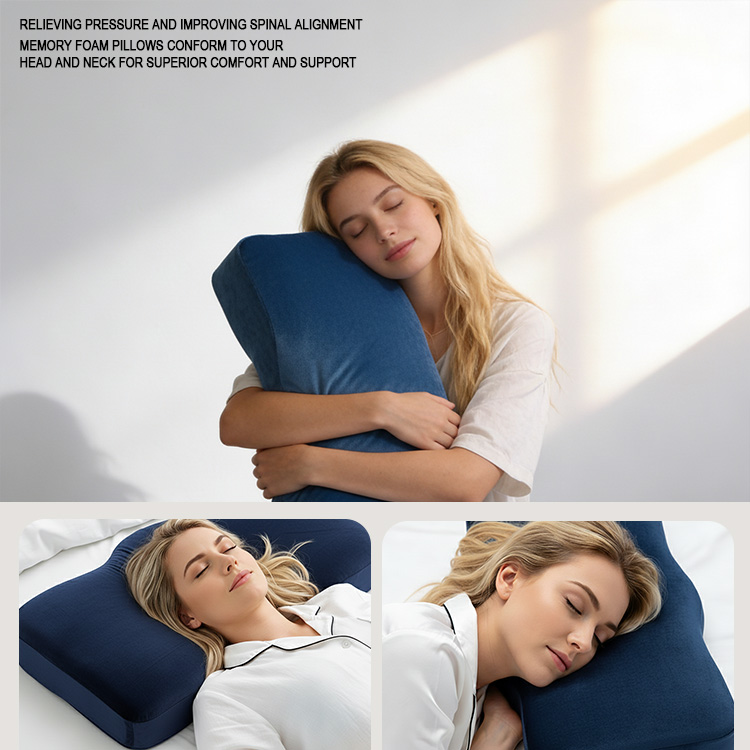
Best Selling Pillow Materials: Memory Foam Dominates
A bedding distributor analyzed 18 months of Amazon US pillow category sales data to identify the material profile of best selling pillows in the 30-80 price tier. Memory foam accounted for 62% of unit sales, with gel-infused memory foam at 28% (the single largest subcategory), standard memory foam at 24%, and shredded memory foam at 10%. Latex pillows represented 14% of sales — concentrated in the 60-100 premium tier. Down-alternative (microfiber-filled) pillows accounted for 16%, split between budget (15-30) and premium (50-80) price points. Buckwheat, water-filled, and adjustable-loft specialty pillows made up the remaining 8%. The data confirmed what consumer preference surveys consistently show: memory foam is not the newest pillow material, but it is the material that best selling pillows most frequently use.
Most best selling pillows adopt memory foam as their primary material because viscoelastic polyurethane foam solves the two problems consumers care about most: personalized support (the foam conforms to individual head and neck shape) and pressure distribution (body weight is spread across the contact surface rather than concentrated at the highest points).
Memory foam — viscoelastic polyurethane foam — was developed by NASA's Ames Research Center in 1966 as aircraft seat cushioning to absorb G-force impact and distribute astronaut body weight during launch and reentry. The material's defining property is viscoelasticity: it deforms under pressure (like a viscous fluid flowing) and recovers its shape slowly when pressure is removed (like an elastic solid rebounding). The slow recovery — 3-8 seconds for pillow-grade foam — is what consumers describe as "molding to my shape."
The chemical structure that produces this behavior is a polyurethane polymer network with glass-transition temperature (Tg) engineered to be close to human body temperature (approximately 35-37°C). At room temperature (20-22°C), the polymer chains are rigid — the foam holds its shape. When body heat transfers into the foam during use, the polymer chains become flexible — the foam softens and conforms. When the user removes their head, the foam cools below Tg, the chains re-rigidify, and the foam slowly returns to its original shape. This temperature-responsive softening is why memory foam provides personalized support that mattress manufacturers describe as "zero-pressure" — the user does not push against the foam; the foam yields around the user.
The density that dominates best selling pillows is 3-5 pounds per cubic foot (50-80 kg/m³) — medium-density memory foam. Density is the strongest predictor of pillow durability because it measures the amount of polyurethane material per unit volume. Higher-density foam contains more polymer chains to distribute load, reducing the stress on each individual chain and slowing the permanent compression (sagging) that marks the end of a pillow's useful life.
A 3 lbs/ft³ pillow maintains adequate support for approximately 18-24 months of nightly use. A 5 lbs/ft³ pillow maintains support for 30-36 months. The consumer value calculation favors medium-density: the price difference between 3 and 5 lbs/ft³ is 15-25, while the perceived support difference is modest because both densities conform effectively at body temperature. The exception is **best selling pillows** in the premium tier (80-120), where 5 lbs/ft³ density is a marketing specification that supports the price point.
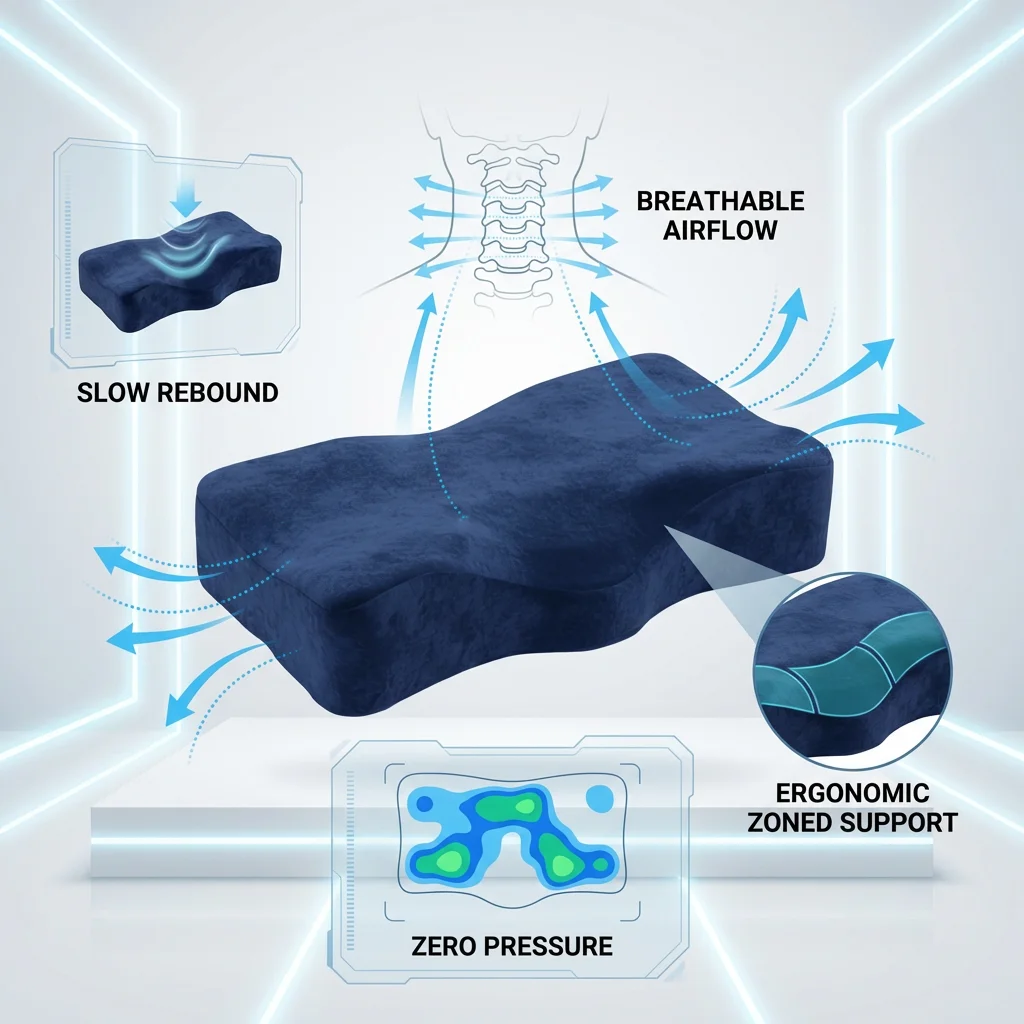
Memory foam — specifically medium-density (3-5 lbs/ft³) viscoelastic polyurethane foam, often with gel infusion, shredded fill for adjustability, or a cooling cover. Memory foam accounts for approximately 60% of pillow sales in the $30-80 price tier, with gel-infused variants the fastest-growing subcategory due to consumer concern about foam heat retention.
Partially. Gel infusion — dispersing thermally conductive gel particles or beads throughout the foam — increases thermal conductivity, drawing heat away from the contact surface faster than unmodified memory foam. The effect is measurable (2-4°C lower surface temperature after 30 minutes of use compared to standard memory foam) but modest — the foam still warms to near body temperature because the user's body is continuously supplying heat. The more effective cooling strategy is a breathable, moisture-wicking cover material combined with a ventilated foam structure (open-cell foam or foam with air channels).
18-36 months, depending on density: 3 lbs/ft³ foam lasts 18-24 months, 5 lbs/ft³ lasts 30-36 months. The failure mode is permanent compression set — the foam no longer recovers its full height after use, creating a depression where the head rests. A simple test: fold the pillow in half and release. A pillow that springs back fully within 3-5 seconds is functional. A pillow that remains folded or recovers to less than 80% of its original height has exceeded its useful life.
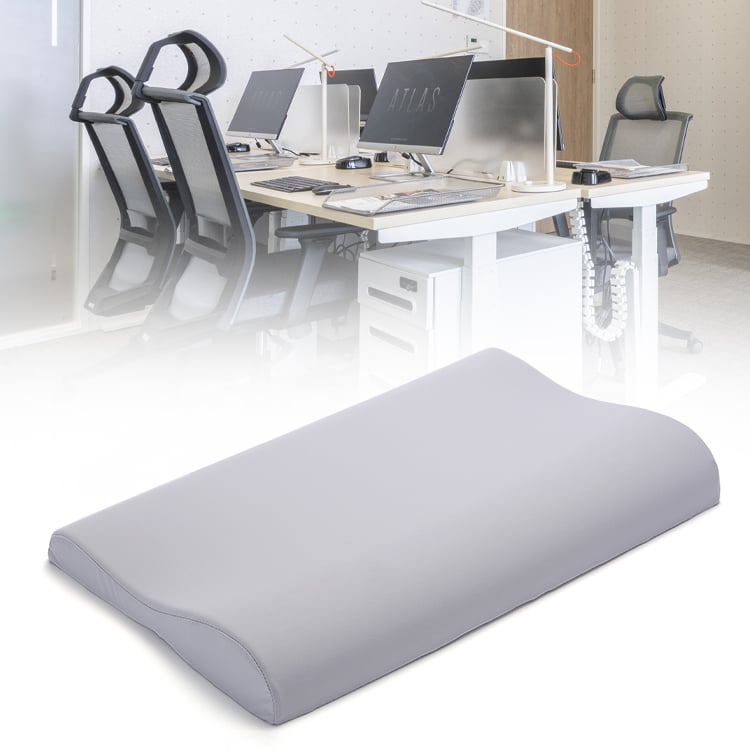
Contoured memory foam with a raised neck-support section (10-13cm height) and a lower head cradle (6-8cm height). The contour fills the gap between the neck and mattress that side sleeping creates — a distance of 10-15cm for most adults. Standard rectangular pillows at uniform height either compress too much (providing neck support but sinking the head too low) or not enough (keeping the head elevated but leaving the neck unsupported).
Shredded memory foam allows the user to adjust loft (pillow height) by adding or removing fill through a zippered opening. The adjustability addresses the primary reason for pillow returns — the pillow height does not match the user's shoulder width and sleep position. Shredded foam also improves airflow through the pillow, reducing heat buildup compared to solid foam. The tradeoff is that shredded foam shifts during the night and may require re-fluffing.
Latex (natural or synthetic) is more responsive — it pushes back against the user rather than conforming around them. This "bouncy" feel appeals to combination sleepers who change positions during the night. Latex is also naturally cooler (no heat-softening behavior) and more durable (5-7 year lifespan vs 2-3 years for memory foam). The tradeoffs are higher cost (60-100 vs 30-60), heavier weight, and the distinct latex odor that persists for 1-2 weeks after unpackaging.

Established in 2007, Welldo is a manufacture and trader specialized in the research, development and production of all kinds of memory foam pillows. We are located in Xiamen, with convenient transportation access. All of our products comply fit international quality standards and are greatly appreciated in a variety of different markets throughtout the world. In order to further enhance the company's strength and competitive edge, and at the same time respond to the call of the country