EN
EN



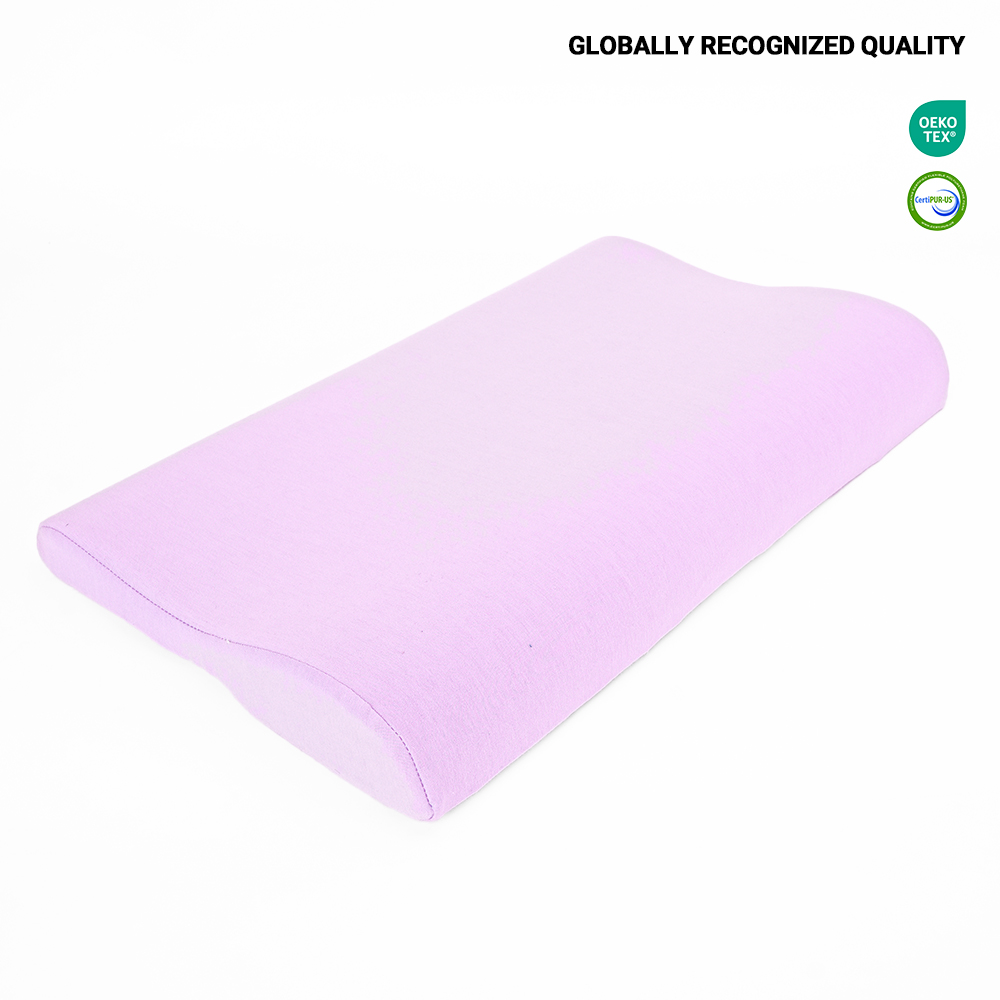
A sleep pillow does more than cushion the head—it actively governs cervical and thoracic posture during rest. In neutral alignment, the ear sits vertically above the shoulder, preserving the natural lordotic curve of the neck. This position minimizes muscle tension and disc pressure, enabling overnight recovery of supporting structures. A pillow that is too firm lifts the head, flattening the cervical curve and disrupting upper thoracic alignment. One that is too soft allows excessive sinking, causing forward tilt or lateral flexion that strains vertebrae. While research suggests roughly 10 centimeters or 4 inches of loft supports most adults, individual variables—shoulder width, mattress firmness, and body morphology—determine optimal support. Consistent contour retention prevents micro-awakenings triggered by positional shifts, safeguarding spinal neutrality. Without it, loss of protective curvature can contribute to morning stiffness and accelerate disc degeneration over time.
The biomechanical sweet spot is the firmness range that keeps the head and neck aligned with the spine’s natural axis. Deviation from this zone escalates misalignment risk. An overly soft pillow compresses excessively, causing lateral tilt in side sleepers or hyperextension in back sleepers—narrowing intervertebral foramina and potentially compressing nerve roots. An excessively firm pillow resists deformation, acting as a fulcrum that forces flexion or lateral bending, especially for back sleepers. A biomechanical analysis found pillows with dynamic response—firm enough to support the occiput yet yielding enough to accommodate shoulder contours—reduce cervical pressure points by up to 25% compared to uniform-firmness designs. Critically, the shift from safe support to harmful posture is subtle: just 2 to 3 centimeters of loft deviation or a head-angle change exceeding 10 degrees can trigger protective muscle guarding. Ideal support thus balances material responsiveness and structural integrity, maintaining alignment without compromising pressure relief.
Your sleep position is the primary biological determinant of ideal pillow firmness. It defines the vertical gap, known as the loft, between head, neck, and mattress. A mismatch here does not merely reduce comfort; it actively undermines spinal neutrality, turning a restorative tool into a source of chronic strain.
Side sleeping creates the largest head-to-mattress gap, dictated by shoulder width. A pillow that is too soft lets the head sink, tilting the cervical spine laterally and compressing neural pathways. Medium-firm to firm support resists compression, maintaining necessary loft. Studies indicate a minimum height of 5 inches or 12.7 centimeters helps most side sleepers keep the head and spine horizontally aligned, minimizing strain. The best designs allow the shoulder to settle deeply while preventing head drop, a principle now informing ergonomic pillow development. This balance prevents the unnatural tilt linked to neurological symptoms like arm numbness and waking stiffness.

For back sleepers, the pillow’s role is precise: fill the cervical lordosis without pushing the head forward. The goal is occipital support that preserves rather than flattens the natural arch. A medium-firm pillow achieves this sweet spot. Excessively thick or rigid options hyperextend the neck, pulling the chin toward the chest and straining anterior ligaments and muscles. Conversely, a flat, ultra-soft pillow fails to lift the occiput adequately, allowing the head to roll back and flatten the curve. The right choice cradles the head with stable, responsive support, reducing micro-awakenings and sustaining neutral, low-stress alignment all night.
Stomach sleeping inherently demands cervical rotation for breathing, making angle minimization the top priority. A high, firm pillow forces upward and backward extension, dramatically increasing torque on facet joints. Instead, ultra-soft, low-loft options, or even no pillow, keep the head closer to the mattress plane. This shallow rotational angle reduces compressive load on cervical joints and surrounding soft tissues, helping prevent the waking stiffness and diffuse neck pain commonly tied to poor pillow fit in this position.
Cervical mechanoreceptors send constant proprioceptive feedback to the brain, guiding subconscious head stabilization during sleep. A soft pillow conforms readily, distributing pressure and reducing localized tissue stress, an advantage for sensitive areas like the mastoid or jaw. Yet excessive conformity dampens sensory input, prompting micro-movements as the nervous system seeks stability. This fragments sleep and activates paraspinal muscles unnecessarily. A firm pillow delivers robust proprioceptive cues, anchoring head position and reducing repositioning, but often at the cost of pressure relief, creating ischemic hotspots. The optimal compromise lies in responsive materials, such as high-resilience latex or ventilated memory foam, that combine even pressure distribution with shape retention, letting the cervical spine relax and maintaining the neural feedback loop essential for sustained alignment.
Waking symptoms often signal a firmness-position mismatch. Morning numbness or tingling, especially unilateral, frequently reflects excessive height or firmness compressing the brachial plexus or subclavian vessels. Persistent neck stiffness typically indicates a pillow that is too soft: collapsing under head weight forces paraspinal muscles to contract isometrically all night. Chronic shoulder pain in side sleepers commonly stems from insufficient loft or firmness, causing the shoulder to roll forward and impinge rotator cuff tendons. These red flags are not just discomfort signals, they are functional warnings. Correcting them usually means adjusting loft or firmness to match your anatomy and preferred sleep posture.
Peer-reviewed research and ergonomic standards provide clear, actionable guidance. A clinical trial published in Sleep Science found back sleepers using a medium-firm pillow with a 4.5-inch or 11.4-centimeter loft maintained cervical alignment within 5 degrees of neutral, while side sleepers achieved optimal shoulder-neck positioning, with alignment within 10 degrees of neutral, using a firm, 6-inch or 15.2-centimeter loft pillow. Stomach sleepers showed the greatest benefit from ultra-soft, low-loft designs that minimized rotational strain. These findings align with occupational safety guidelines recommending fill materials with a resilience of at least 18 Newtons of Indentation Load Deflection, ensuring consistent shape retention across the night. Individual factors matter too: broader shoulders generally require firmer support, while smaller frames may benefit from softer, lower-loft options. At home, perform a simple alignment check: lie in your usual position and ask someone to observe whether your neck stays straight. If your head tilts up or down, adjust loft or firmness until your spine forms a neutral line from skull base to sacrum. A pillow that sustains this alignment does not just improve comfort, it actively protects neuromuscular health and deep-sleep architecture.
Why does pillow firmness matter for spinal alignment? Pillow firmness affects the position of your head and neck relative to your spine. A proper level of firmness ensures neutral alignment, reducing muscle strain and preventing morning stiffness.
How can I determine the right pillow firmness for my sleep position? Your sleep position is key: side sleepers typically need medium-firm to firm pillows, back sleepers benefit from medium-firm options, and stomach sleepers are better suited for ultra-soft, low-loft pillows or even no pillow at all.
What happens if I use a pillow that’s too firm? Using a pillow that is too firm can elevate the head too much and disrupt the natural curvature of the cervical spine, leading to tension and discomfort.
Are there materials that are better for maintaining spinal alignment? Responsive materials like high-resilience latex or ventilated memory foam provide a balance of pressure relief and support, making them excellent choices for maintaining spinal alignment.
What are signs that my pillow isn’t the right fit? Symptoms such as morning numbness, waking stiffness, or chronic shoulder and neck pain are common red flags of a pillow that does not match your anatomy or sleep position.

Established in 2007, Welldo is a manufacture and trader specialized in the research, development and production of all kinds of memory foam pillows. We are located in Xiamen, with convenient transportation access. All of our products comply fit international quality standards and are greatly appreciated in a variety of different markets throughtout the world. In order to further enhance the company's strength and competitive edge, and at the same time respond to the call of the country