EN



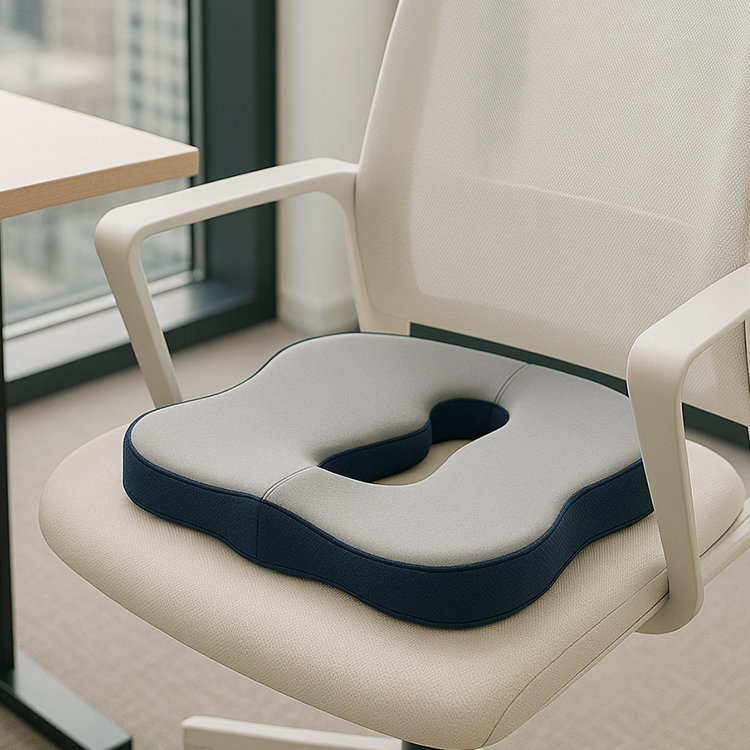
Sitting for long office hours leaves many workers with tired legs and a stiff lower back. A footrest that sits at the wrong height does little for comfort and can quietly worsen seated posture. For most standard desks, the target is a support that lets the thighs stay roughly parallel to the floor while the knees bend near 90 degrees. Getting that elevation right separates relaxed circulation from constant pressure.
Poor elevation choices carry a hidden cost procurement teams overlook. When the support sits too high, the knee hyperextends and the thigh rises, pushing the pelvis forward and rounding the lumbar spine into a strained curve. Too low, and the foot barely touches, so the calf stays tense and blood pools in the lower leg. Either error raises discomfort and sick-leave risk, so seat and support must be specified together.
When the seat is too high, the feet dangle and the pelvis tilts backward, flattening the natural curve of the lower spine. A footrest restores contact between the soles and a stable surface, which re-establishes a neutral hip angle and keeps the knee lightly loaded. The aim is to remove the floating strain on the hamstrings and calves rather than lift the legs high. Proper alignment shifts weight through seat and feet instead of concentrating force on the buttocks and lumbar discs.
Without a ground reference, the body compensates by rounding the lumbar region and pushing the shoulders forward. Over a full workday this static load tires the erector muscles and reduces blood flow to the pelvic tissues. The knees drift together and the ankles fall into awkward angles the nervous system reads as instability. A footrest under the heels counters much of this covert load before it becomes pain, turning passive rest back into genuine recovery.
Ergonomists describe healthy sitting with a simple rule: hips, knees, and ankles each near 90 degrees. Sit with the chair adjusted so the thighs are flat, then measure the gap under the feet. That gap is the elevation the support must fill. OSHA guidance frames seated posture around keeping the body supported and joints at rest, while BIFMA criteria for office seating emphasize stable support surfaces. A 5 to 15 centimeter gap covers many adult users at standard desks.
Numbers alone do not finish the job. The heel should rest lower than the ball of the foot so the ankle keeps a small open angle, and the calf should not press the front edge of the support. A slight forward tilt encourages the shin to lean, which relaxes the thigh and improves venous return toward the heart. Workers feeling tingling in the calves usually need a lower profile or softer top rather than more elevation.
Shared offices and hot-desking stations serve different statures, so a single fixed height fits almost no one perfectly. An adjustable footrest lets each user set the exact elevation and tilt, then revisit it after a few days as muscles adapt. Plants running ISO 9001 systems specify adjustable supports for contract seating because one SKU satisfies more body types and cuts returns. A range of 5 to 20 centimeters with a few tilt stops covers a broad population.
A fixed support still earns its place at a dedicated workstation where one person and one chair height never change. It costs less, has no moving parts to loosen, and suits task seating with a known desk measurement. The trade-off is less flexibility, so the buyer must confirm the exact gap first. Fixed units with a gently textured or memory-foam top help the soles stay put, while models meeting CertiPUR-US emission limits keep indoor air cleaner in closed offices.
Begin with the chair: raise or lower it until the elbows meet the desk at a right angle and the thighs run level. Whatever gap remains beneath the heels defines the support height. Tall users at standing-desk converters and short users at standard desks often need opposite solutions, so measure both before buying any footrest. Desk height, chair height, and floor clearance together set the number, and ignoring any one produces a support that looks right but feels wrong.
A European home-textile distributor planned to add ergonomic seating to its catalog but struggled with mixed feedback from pilot customers who found imported supports either too tall or too low. The problem was a one-size fixed height shipped to markets with different average body sizes. The solution was to source an adjustable footrest with a 5 to 18 centimeter range and OEKO-TEX Standard 100 certified covers, then add a measuring card. The effect was fewer complaints and steadier repeat orders across retail partners.
It helps to set a simple care routine so the benefit survives daily use. Inspect the base monthly for cracks and confirm the tilt lock holds; wipe the cover with a damp cloth and dry fully before reuse. Buyers should request foam samples meeting CertiPUR-US emission limits and covers tested to OEKO-TEX Standard 100, then audit one unit from each shipment. Used well, the same support serves a worker for years without losing its posture value.
The ideal elevation is not a single magic number but a measured response to each person's seat and desk. A well-chosen footrest keeps the knees near 90 degrees, supports the pelvis, and relieves the lower-back and leg pressure that builds during long sitting. Pair an adjustable model with a short break routine, check the foam and cover quarterly, and the workstation becomes genuinely supportive rather than merely compliant.
What is the standard height range for an office footrest?
Answer: Most workers need a support that fills the gap under the heels, typically from 5 to 15 centimeters at a standard desk. Taller users or those at high chairs may require up to 20 centimeters. Measure the space between the sole and the floor while sitting with thighs level, then choose the nearest setting. An adjustable model covering 5 to 20 centimeters suits shared offices where many body sizes share the same workstation each day.
Why does knee angle matter more than total lift?
Answer: Elevation alone means little if the joint sits at the wrong angle. A near-90-degree knee bend keeps the thigh parallel to the floor and lets the calf relax, which protects circulation in the lower leg. Too much lift forces the knee open and tightens the hamstring, while too little leaves the foot floating. The target is the angle, not the number of centimeters, so users should adjust until the knee feels unloaded rather than chasing a fixed height value.
How should a buyer match a support to a standing desk converter?
Answer: Begin by setting the chair so the elbows meet the desk at a right angle, then note the gap beneath the heels. A converter raises the work surface, so the chair often drops and the foot gap grows. Choose a taller range or an adjustable unit in that case. Confirm floor clearance under the desk before ordering, because a bulky base may not slide into a shallow space and will force an awkward, unsupported leg position during the day.
Can a fixed support relieve lower-back pressure?
Answer: Yes, when the workstation never changes and the user's measurements are known in advance. A fixed model holds the heels at one steady height, which keeps the pelvis tilted forward and the lumbar curve intact. The limitation is no flexibility, so it suits a dedicated desk rather than hot-desking. Buyers should measure the exact gap first and pick a textured top so the soles stay planted. For mixed-size teams, an adjustable version serves more people and reduces poor fit.
Which cover material is safer for daily office use?
Answer: Covers tested to OEKO-TEX Standard 100 are verified safe for skin contact, a sensible choice where bare ankles rest for hours. Breathable mesh helps heat escape and keeps the surface dry, while a removable washable layer supports hygiene in shared spaces. Foam meeting CertiPUR-US emission limits avoids excess indoor vapors. Buyers should confirm the cover zips off easily and the base stays stable on carpet or tile, since a slipping support defeats the posture benefit entirely during long sessions.

Established in 2007, Welldo is a manufacture and trader specialized in the research, development and production of all kinds of memory foam pillows. We are located in Xiamen, with convenient transportation access. All of our products comply fit international quality standards and are greatly appreciated in a variety of different markets throughtout the world. In order to further enhance the company's strength and competitive edge, and at the same time respond to the call of the country